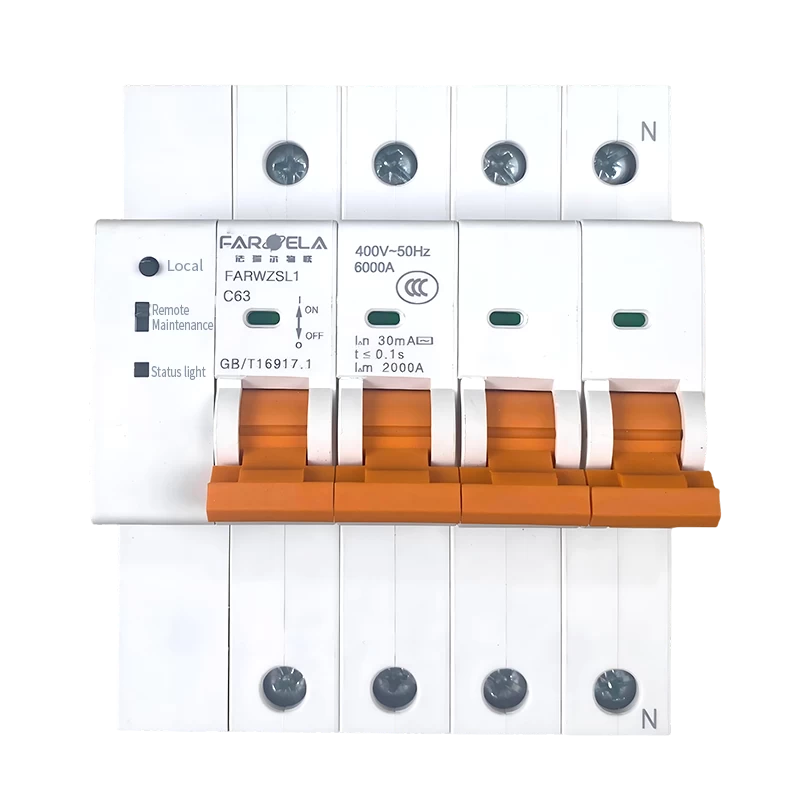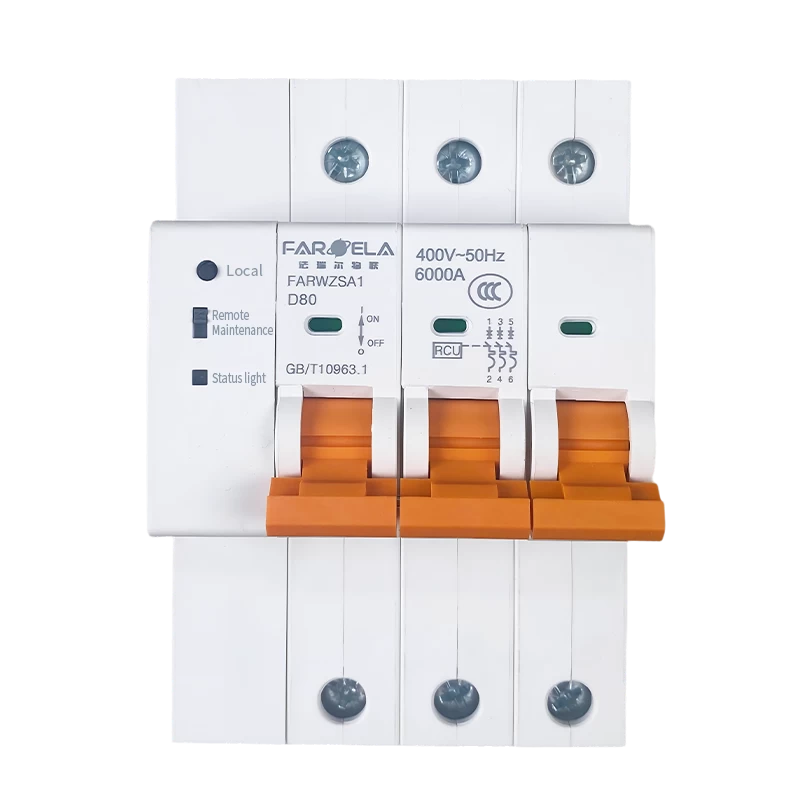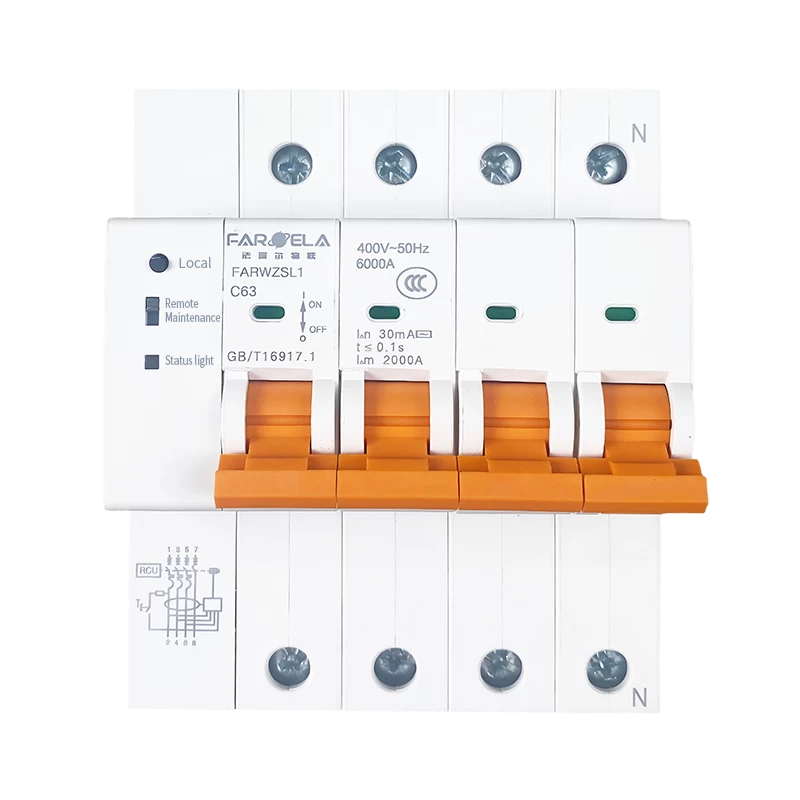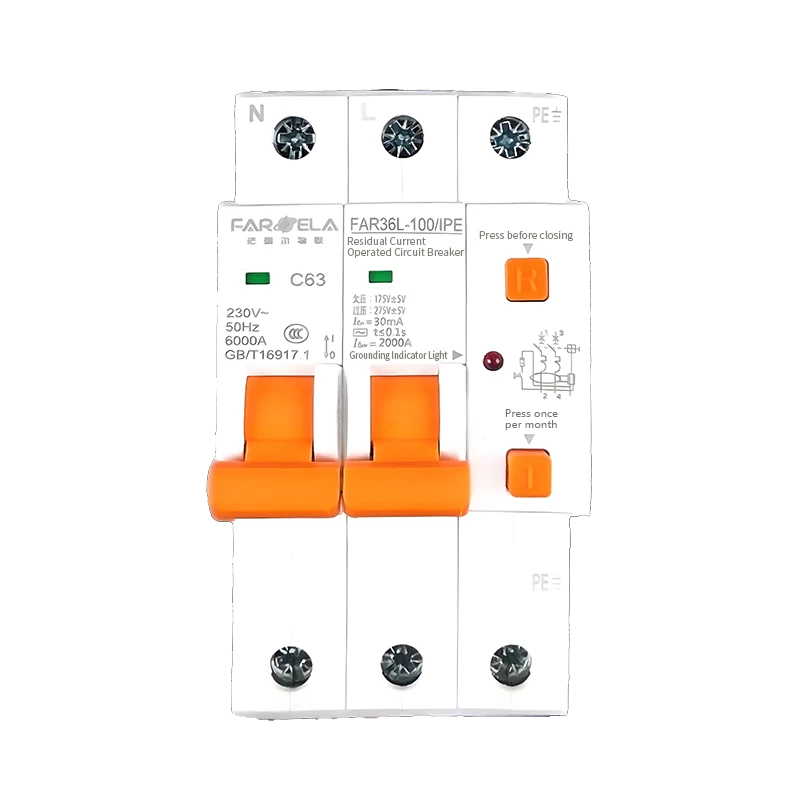
A smart breaker is only as useful as the data it delivers and the platform that receives it. Two projects can buy the same hardware and end up with completely different results, because the integration decisions - protocol, gateway, data points, whose cloud the data lands in - were settled late rather than at the beginning.
This article covers the integration options for OEM smart breaker projects, what each one suits, and what to specify so that the device and the software arrive as one product rather than two.
1. Start from the data, not the radio
The usual mistake is to choose a communication technology first. A more reliable order is to decide what the installation actually needs to know:
- Energy management: per-circuit consumption, load profiles, cost allocation.
- Safety and maintenance: trip events, leakage current trends, temperature rise, overload history.
- Control: remote switching of selected circuits, scheduling, load shedding.
- Compliance and reporting: audit trails, alarm escalation, uptime statistics.
Only then does the protocol question become answerable - and the answer is often "more than one".
2. Wired: RS485 and Modbus
For commercial and industrial distribution boards, RS485 with Modbus is still the workhorse. It is robust in electrically noisy environments, cheap to cable, well understood by building-management integrators, and it does not depend on a wireless signal inside a metal enclosure.
- What to specify: baud rate, addressing scheme, register map, and whether the device supports Modbus RTU only or also TCP through a gateway.
- Practical limits: devices per bus segment, cable length, and termination practice all affect reliability. Ask for the recommended topology rather than assuming.
- Gateway role: a gateway converts RS485 to Ethernet or to the cloud, and can also buffer data when the upstream link drops.
3. Wireless: Wi-Fi, 4G and low-power wide area
- Wi-Fi suits single dwellings, small offices and retrofit projects where no bus wiring exists. It depends on a stable local network, which is not guaranteed in a distribution room.
- 4G/LTE suits distributed sites - base stations, kiosks, remote pumping or lighting cabinets - where a SIM per gateway is more practical than a wired uplink. Data cost and roaming policy should be part of the quote.
- NB-IoT, LoRa and similar fit low-bandwidth, long-range monitoring where the device reports periodically rather than streaming. Coverage must be verified at the actual site before committing.
Mixed installations are common: wired inside the building, wireless for the uplink to the platform.
4. The gateway layer
A gateway is usually the difference between a collection of devices and a managed system. What it should provide:
- Protocol conversion between the field bus and the upstream link.
- Local buffering so a network outage does not lose data.
- Device discovery and addressing, so commissioning does not need specialist software.
- Optional local logic - for example switching a circuit off when a threshold is exceeded, without waiting for the cloud.
- A defined security model: encrypted transport, credential management, and firmware update path.
5. Data points to specify
Measurement granularity is a commercial decision, not just a technical one, because it drives firmware load, data volume and platform cost. Typical points available from a smart breaker platform:
- Per-pole voltage, current, active power and power factor.
- Cumulative and interval energy (kWh), for billing or cost allocation.
- Leakage current, where leakage protection is integrated.
- Conductor or terminal temperature, where a sensor is fitted.
- Status and event data: open/closed, remote operation, trip cause, over/under-voltage, overload alarm, communication loss.
- Control commands: remote open/close, alarm reset, threshold setting.
Confirm the reporting interval and the on-device storage depth. A device that reports every 15 minutes and stores nothing locally behaves very differently from one that records events and uploads them after an outage.
6. Whose platform does the data land in?
For an OEM brand, this is the decision with the longest consequences. Three workable models:
- Manufacturer platform, your branding. Fastest route to market: the hardware, gateway and cloud already work together, and the console and app carry your brand. Least development, least control.
- Manufacturer platform with API access. Your own software pulls data through an API or MQTT feed and presents it inside your product. A middle path that suits brands with an existing software team.
- Your platform, manufacturer's devices. Devices stream to your infrastructure. Maximum control and maximum responsibility - you own the register map, the security model and the uptime.
Whichever you choose, settle four points in writing: who owns the data, how long it is retained, who can access it, and what happens to historical data if the commercial relationship ends.
7. What to put in the integration RFQ
- Site type and scale: how many circuits, how many boards, how many sites.
- Required data points, accuracy and reporting frequency.
- Preferred protocol and any existing BMS or SCADA standard it must match.
- Uplink availability at each site, and whether a gateway is needed.
- Platform model chosen from the three above, with branding requirements.
- Security requirements: encryption, authentication, update policy.
- Commissioning expectations: who addresses devices, who trains the installer, who supports the end user.
Integration checklist
- Define the data requirements before choosing the communication technology.
- Confirm the register map and protocol documentation will be provided for OEM projects.
- Plan the gateway layer, including buffering and local control behaviour.
- Agree the reporting interval and local storage depth.
- Choose the platform model deliberately, and document data ownership and retention.
- Test the complete chain - device, gateway, platform, app - before volume production.
Zhuhai Farrell Electronic Technology develops and manufactures smart circuit breakers from 1P to 4P with integrated protection, metering and remote control, along with leakage protection and arc-extinguishing models. We supply OEM/ODM projects with hardware and software developed in-house. Contact us for specifications, samples and platform integration details.