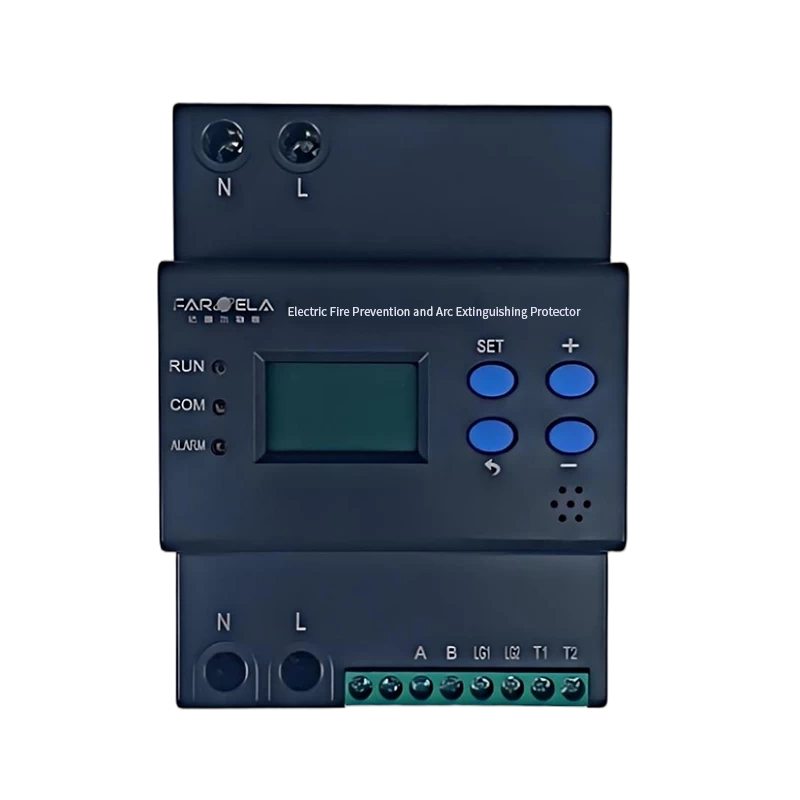
Certification is the part of an OEM smart breaker project that catches brands out, because it behaves differently from ordinary procurement. A certificate is tied to a specific construction, a specific firmware function set and a specific manufacturing site - not to a product concept. Change any of those after testing and the paperwork no longer describes what you are shipping.
This article explains how certification decisions interact with customization, what to plan for in time and samples, and what has to be settled before volume production starts.
1. The device type decides the standard
Circuit breakers are covered by different standards depending on what they are and where they are sold. The main families a smart breaker project will meet:
| Device type | Typical international standard | Notes for OEM projects |
|---|---|---|
| Miniature circuit breaker (MCB) | IEC 60898-1 | The classic household and commercial DIN-rail breaker; curves and ratings are defined here |
| RCBO (MCB with integral leakage protection) | IEC 61009-1 | Leakage sensitivity and trip time requirements are additional to the overcurrent tests |
| RCCB / RCD | IEC 61008-1 and related parts | Leakage-only devices used upstream of MCBs |
| Moulded case circuit breaker (MCCB) | IEC 60947-2 | Rated for industrial distribution; the smart and metering functions are assessed as part of the device |
| Electronics and EMC | IEC 61000 series | Applies to the communication and metering electronics; relevant for every smart variant |
Regional schemes then layer on top: CCC for the Chinese market, CE (and UKCA for the United Kingdom) for Europe, CB scheme reports as a route to multiple national approvals, and North American listings such as UL 489 or UL 1077 depending on whether the device is treated as a circuit breaker or a supplementary protector. Confirm the current requirement for each destination with your certification partner or laboratory rather than assuming a report transfers.
2. How customization affects a certificate
The practical rule is that anything affecting the electrical, thermal or functional behaviour of the device must be assessed. In an OEM programme, these are the changes most likely to trigger re-testing:
- New communication module or a different radio type - changes the EMC profile and often the internal layout.
- Firmware functions added or removed - protection logic, alarm thresholds and remote switching behaviour are part of what was tested.
- Housing material or colour change - affects flammability and temperature performance, which are tested properties rather than cosmetic ones.
- Different terminal arrangement or internal wiring - affects creepage, clearance and temperature rise.
- A different manufacturing site - factory inspections and follow-up audits are attached to the certificate.
- Rating variants - usually covered by the same approval if the frame and construction are one family, but this is a question for the laboratory, not an assumption.
Conversely, changes that are genuinely cosmetic - the logo on the front face, the carton artwork, the manual language - normally do not affect the certificate. Sorting changes into these two groups early saves both money and schedule.
3. Planning samples, time and cost
- Samples: certification bodies require a number of production-representative samples per type and rating, plus spares. Build this into the sample plan rather than drawing them from the customer's evaluation stock.
- Time: testing programmes run from several weeks to a few months depending on the standard, the number of variants and the laboratory's queue. Treat it as a critical-path item, not a formality after production.
- Cost: budget per family and per market, plus periodic factory inspection fees where the scheme requires them.
- Ownership: decide in the contract whether the certificate is held by the manufacturer (with the brand as licensee) or by the brand. This determines what happens if you change supplier later.
4. Product marking
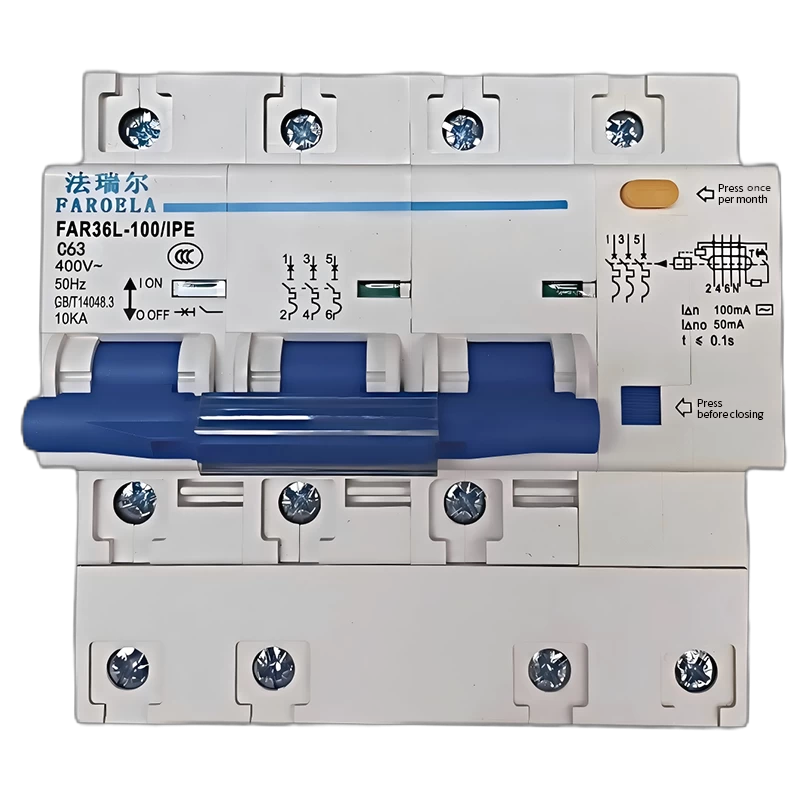
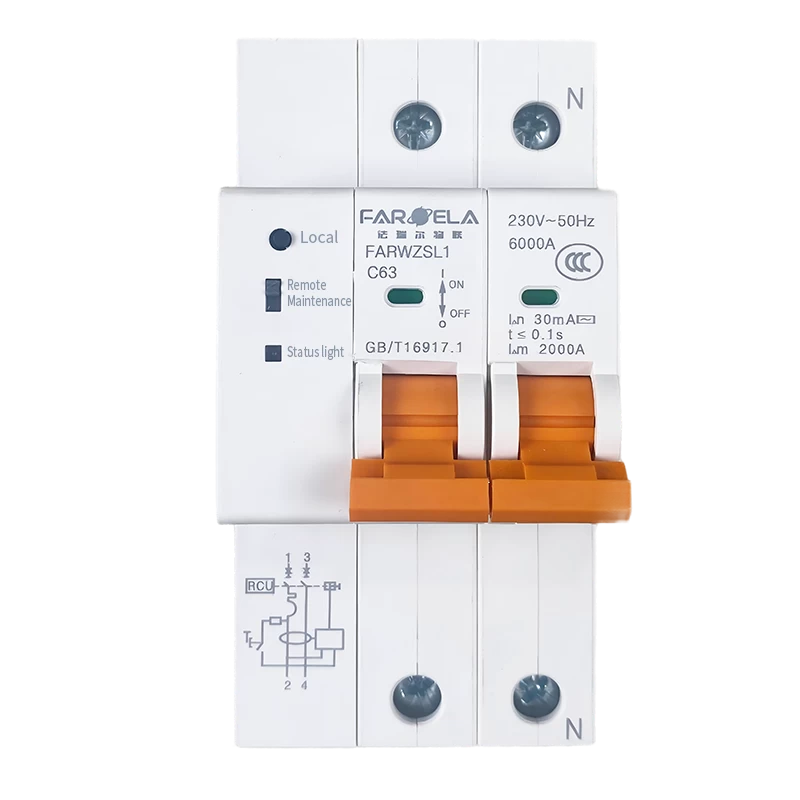
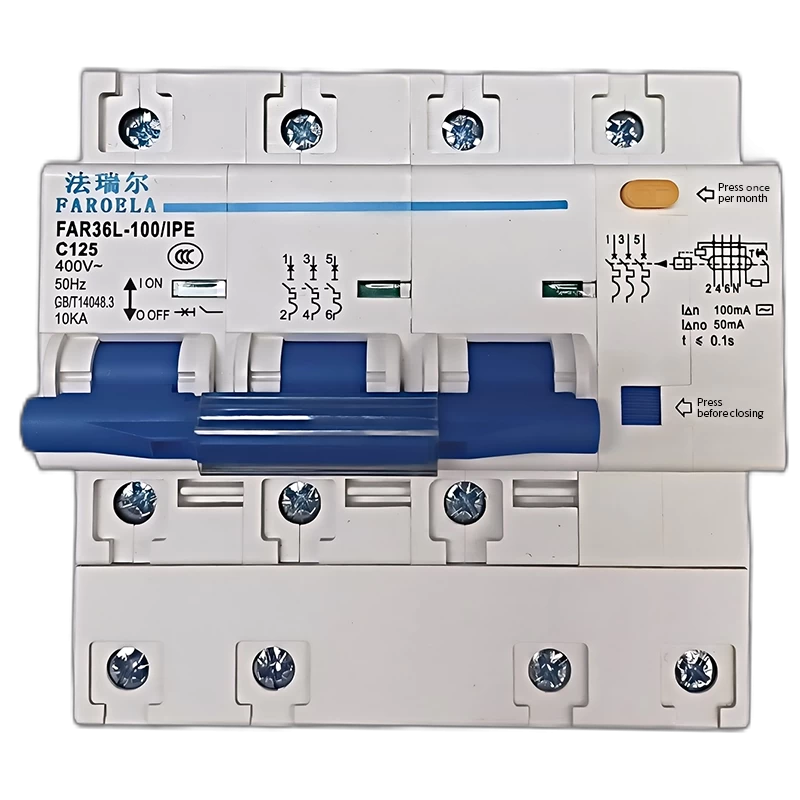
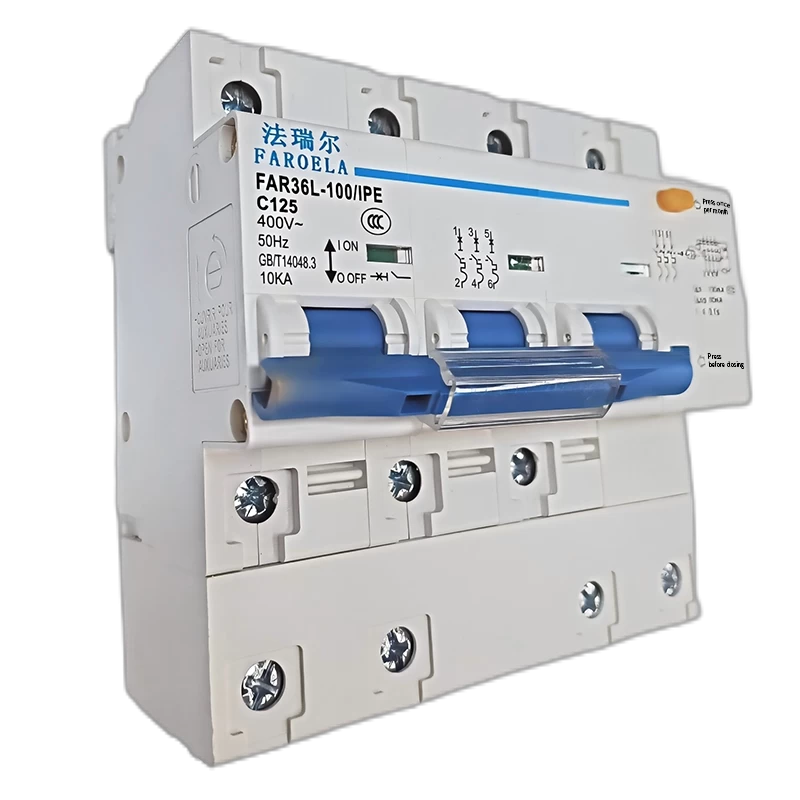
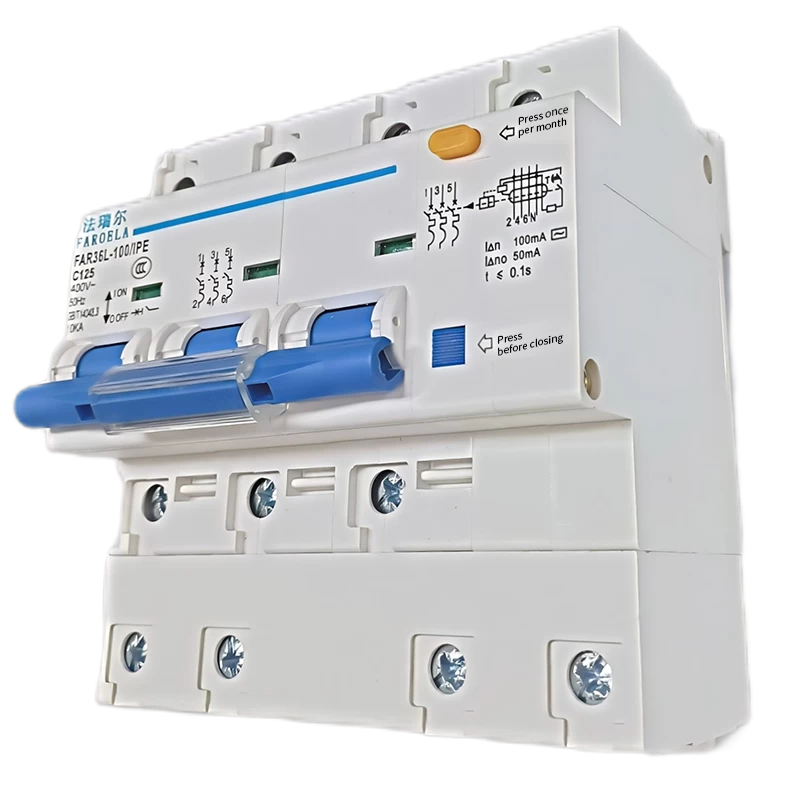
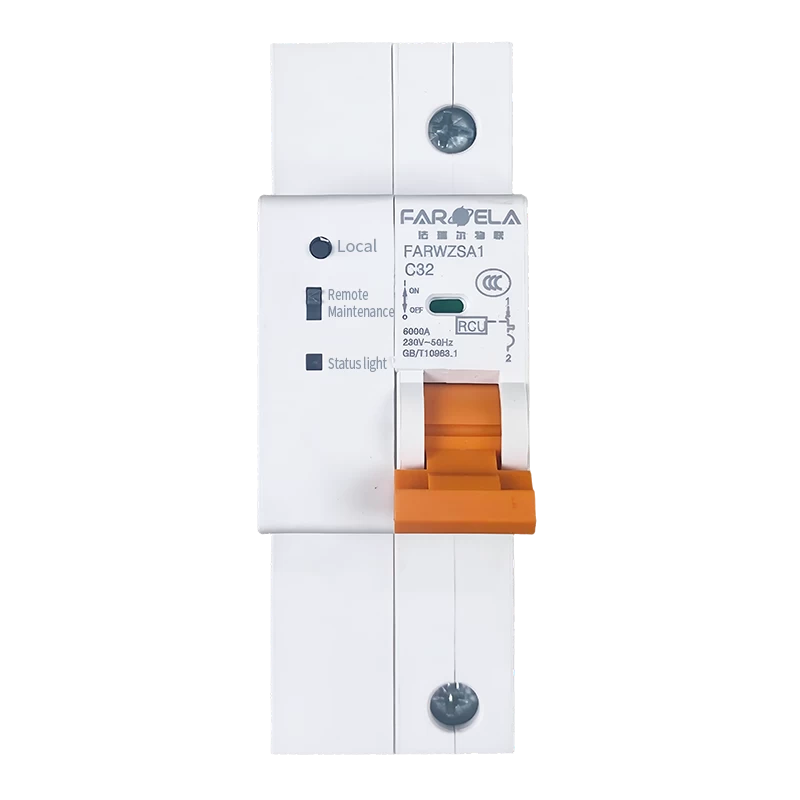
Marking is both a legal requirement and a branding opportunity, and the two must not conflict. A typical breaker face carries:
- Manufacturer or brand identification, and the model designation.
- Rated voltage, rated current and frequency.
- Tripping curve (B, C or D) and rated breaking capacity.
- The reference standard, and the certification mark where the market requires it.
- Connection diagram and, on leakage devices, the rated residual current.
Two practical points. First, marking must be permanent - marking permanence is itself tested, which is why laser marking on the housing is preferred over an adhesive label for anything that must survive the product's life. Second, the model designation should encode the variant, so that a 2P 63 A leakage model and a 2P 63 A standard model cannot be confused in a warehouse or on a purchase order.
5. Packaging and documentation
- Carton and unit marking must match the device inside: rating, curve, quantity per carton, and barcodes if your channel requires them.
- Manual language and content should cover installation, wiring, platform onboarding and the safety warnings the market expects.
- QR codes linking to documentation or the app are increasingly expected and cost almost nothing to add.
- Warranty and support statement - who the end user contacts, and for how long.
6. Compliance checklist before production
- Destination markets and the exact standards each one requires.
- Device type confirmed - MCB, RCBO, RCCB or MCCB - and the corresponding standard identified.
- List of customization changes classified as cosmetic or technical.
- Certification plan with samples, laboratory, timeline and budget.
- Certificate ownership and licensing agreed in writing.
- Marking artwork approved against the standard's requirements, not only against brand guidelines.
- Packaging, manual and warranty text frozen alongside the product artwork.
- Firmware version recorded on the certificate documentation and in the purchase order.
Zhuhai Farrell Electronic Technology develops and manufactures smart circuit breakers from 1P to 4P with integrated protection, metering and remote control, along with leakage protection and arc-extinguishing models. We supply OEM/ODM projects with hardware and software developed in-house. Contact us for specifications, samples and platform integration details.