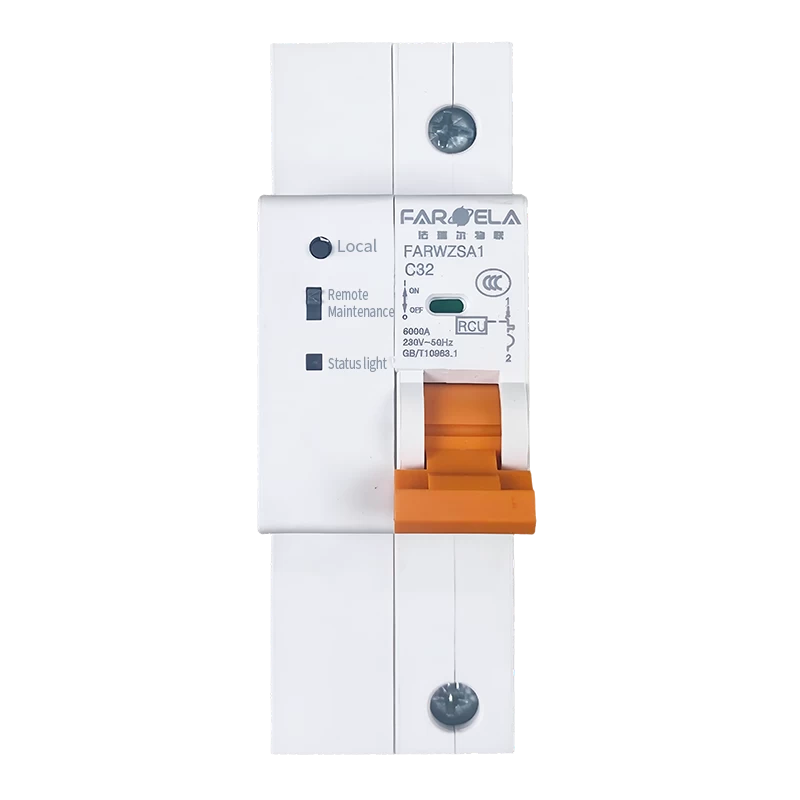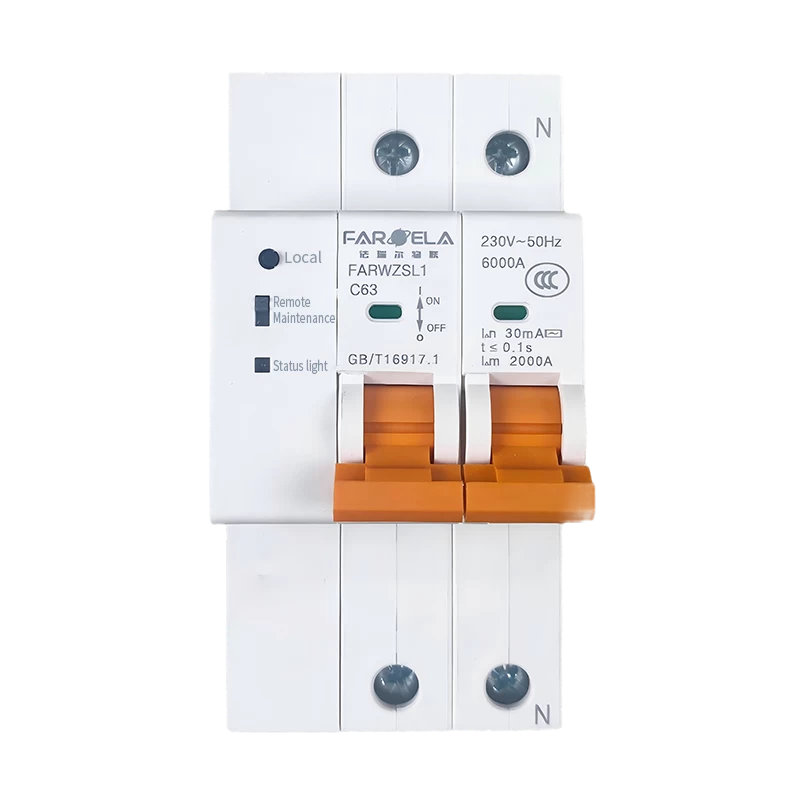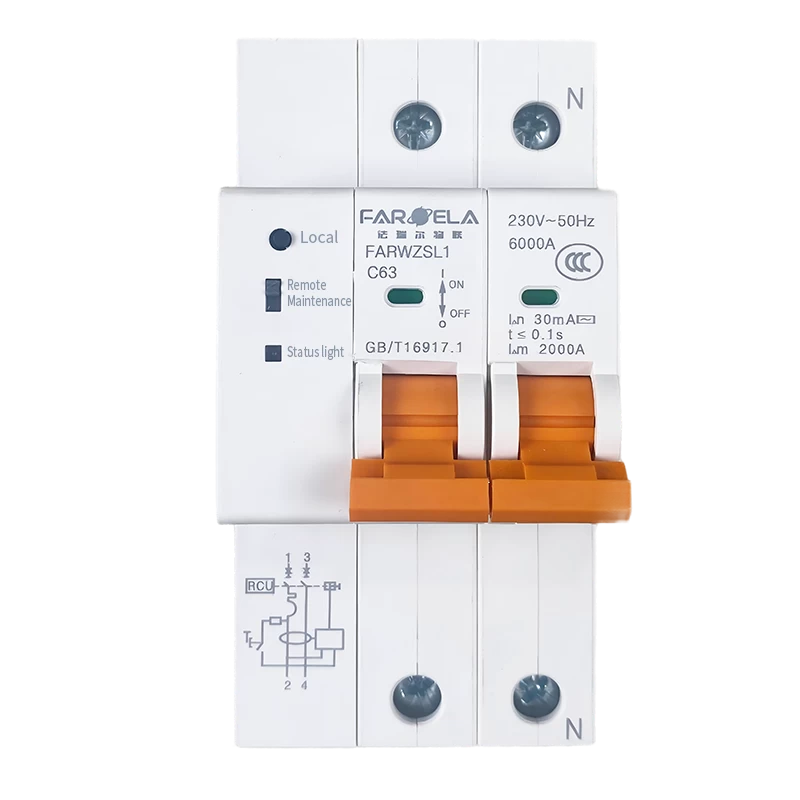
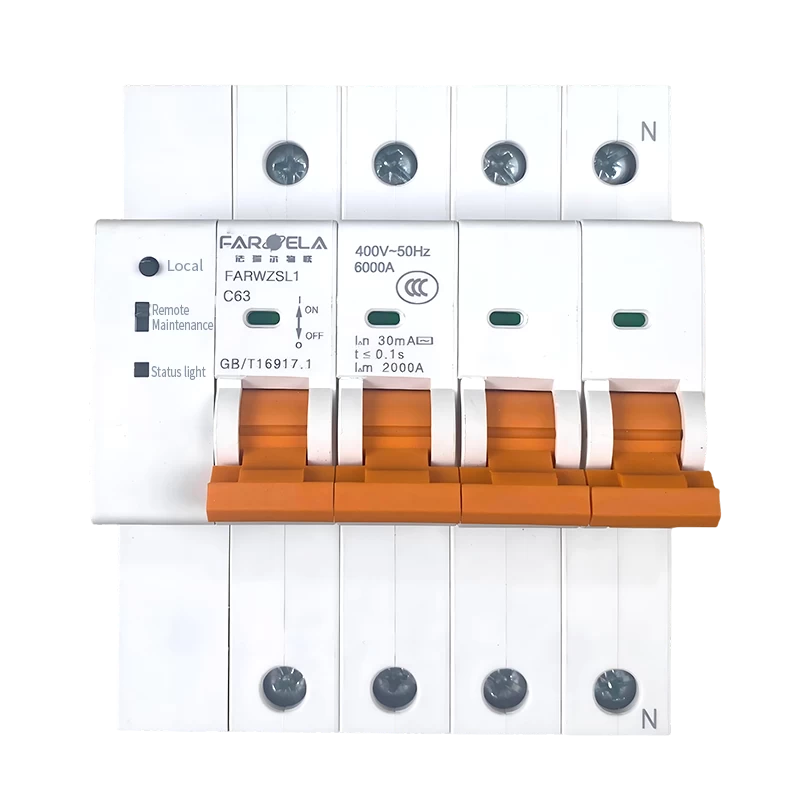
A smart circuit breaker is a compact product with a surprising number of decisions inside it. Behind the same modular DIN-rail housing sit a contact system, a current sensor, a metering chip, a communication module and firmware. When a brand decides to sell its own smart breaker, it is choosing a configuration at each of those levels - and the choices, not the logo on the front, are what determine whether the product fits the market it is aimed at.
This article sets out what an OEM/ODM programme for smart breakers actually covers, layer by layer, and where tooling and minimum order quantities come from.
1. The four customization layers
- Electrical configuration - poles, rated current, trip curve, breaking capacity, leakage sensitivity, protection functions.
- Mechanical and enclosure - module width, terminal type, housing material and colour, marking method, accessories.
- Electronics and firmware - metering accuracy, remote switching, measurement points, alarms and communication protocol.
- Branding and packaging - printed or lasered logo, model naming, label plate, manual language, retail or bulk packaging, platform branding.
Each layer has a different cost and lead-time profile. Electrical variants within an existing platform usually carry no tooling at all. Enclosure or housing changes can require moulds. Firmware and platform changes are engineering time rather than tooling, but they are the changes that most often affect certification.
2. Electrical configuration
This is where most OEM ranges are built, because it is the cheapest axis of differentiation:
- Poles: 1P, 2P, 3P and 4P cover single-phase branch circuits through to three-phase feeders. The reference products in our own range run from 1P to 4P smart breakers, plus dedicated leakage-protection models.
- Rated current: commonly 6 A to 125 A depending on the frame, with 63 A and 100 A the volume sellers in commercial distribution boards.
- Voltage class: 220/230 V single-phase and 380/400 V three-phase variants should be separate line items, not an afterthought.
- Trip curve: B, C and D curves determine the instantaneous trip threshold. Residential and commercial lighting and socket circuits usually want C; circuits feeding motors or transformers may need D.
- Breaking capacity: the short-circuit current the device can interrupt. This has to match the prospective fault level at the installation point.
- Leakage threshold: 30 mA for personnel protection, 300 mA or higher for fire protection and selective coordination.
- Additional functions: arc-fault detection, over/under-voltage protection, and metering - each of which is a firmware and hardware option rather than a cosmetic one.
3. Mechanical and enclosure options
- Module width and pitch - standard 18 mm modules up to 4P, and wider moulded cases for higher ratings.
- Terminal and busbar compatibility - screw or cage terminals, and whether your market expects pin or fork busbar systems.
- Housing colour and material - white and grey are the defaults; custom colours are possible and normally require a minimum moulding quantity.
- Marking method - laser marking gives permanent, high-contrast text directly on the housing; printed labels are cheaper for low volumes and can be applied by the customer locally.
- Accessories - auxiliary contacts, shunt trips, sealing covers and locking devices; these are usually shared with a standard accessory family.
4. Electronics, firmware and platform
This is where a smart breaker differs from a conventional one, and where the specification conversation gets interesting. The questions to settle early are:
- What is measured, and to what accuracy - current, voltage, power, energy, temperature, leakage current?
- Is remote switching required, and does it need to fail safe if communication is lost?
- Which events are logged and reported - trips, alarms, over/under-voltage, tamper attempts?
- Which protocol carries the data, and does the customer integrate with the manufacturer's platform or their own?
Connectivity and platform decisions deserve their own discussion; they are covered in detail in our article on protocols, gateways and data points.
5. Branding and packaging
- Device branding: logo and model naming on the front face, plus the technical marking required by the applicable standard.
- Documentation: manual language, wiring diagram, platform registration instructions, warranty statement.
- Packaging: individual box, bulk carton, or a retail pack with a printed sleeve and a QR code linking to the app or platform.
- Platform presentation: the app name, login page and console branding can all be white-labelled, which is often the most visible part of the product for the end customer.
6. The OEM process, step by step
- Application brief - the market, the installation type, the standards that apply and the target price band.
- Configuration proposal - a recommended combination of poles, ratings, functions and connectivity, with the certification implications stated.
- Samples - engineering samples for bench evaluation, then branded samples for customer approval.
- Approval and pilot - a pilot run that proves the production line reproduces the approved sample.
- Volume production and repeat orders - with frozen firmware version and marking artwork.
7. Where tooling, MOQ and lead time come from
- No tooling: pole and rating variants inside an existing platform, standard housing, standard label.
- Low tooling: custom moulding colour, custom label plate, custom printed box.
- Tooling required: new housing geometry, new terminal arrangement, or a new frame size.
- Engineering rather than tooling: firmware features, protocol integration and platform white-labelling - cost is measured in development time and testing, not in moulds.
OEM/ODM checklist
- Confirm the electrical configuration and the fault level it must handle.
- Decide which functions are hardware and which are firmware.
- Settle connectivity and platform ownership before the sample stage.
- State the marking, documentation and packaging requirements per market.
- Agree who holds the certification and which market variants it covers.
- Freeze the firmware version and artwork at approval, and reference both in the purchase order.
Zhuhai Farrell Electronic Technology develops and manufactures smart circuit breakers from 1P to 4P with integrated protection, metering and remote control, along with leakage protection and arc-extinguishing models. We supply OEM/ODM projects with hardware and software developed in-house. Contact us for specifications, samples and platform integration details.